

A companion piece to a previous article on remodeling bathrooms in historic and older homes
The kitchen is the heart of the home, particularly in the older and historic residences of the Washington, DC metropolitan area. These kitchens have provided for generations of families, reflecting years of daily use and embodying the quality and craftsmanship often absent in modern construction. Features such as the butler’s pantry off the back hall, the deep windowsill above the farmhouse sink, and original hardwood floors worn precisely where people have gathered to cook, serve as reminders of these homes’ enduring character.
However, the characteristics that give these kitchens their charm are what make them inefficient and dated. Galley layouts, for example, harken back to a time when there was only a single cook in the family. Appliances are tucked into awkward places because they didn’t exist when the home was built. And the lack of islands, informal dining areas, and connection to the outdoor living that today’s homeowner expects were not even a consideration at the time. The bones of the room are often exceptional. The infrastructure and the layout rarely are.
At Metro Design Build Group, we work with homeowners across Northern Virginia, Washington, DC, and Montgomery County, Maryland who are balancing their love of their older homes with the practical need for an updated kitchen. Our expertise lies in modernizing spaces while preserving the unique character that makes each home distinctive — a process that is both challenging and highly rewarding.
The Challenge: Why Kitchen Remodeling in Older Homes Demands More
A kitchen remodel in a ten-year-old home in Loudoun County and a kitchen remodel in a 1930s Federal on Capitol Hill are not remotely the same project. Discovering what lies behind walls, beneath floors, and above ceilings separates an experienced design-build firm from one that is learning on your time and at your expense.
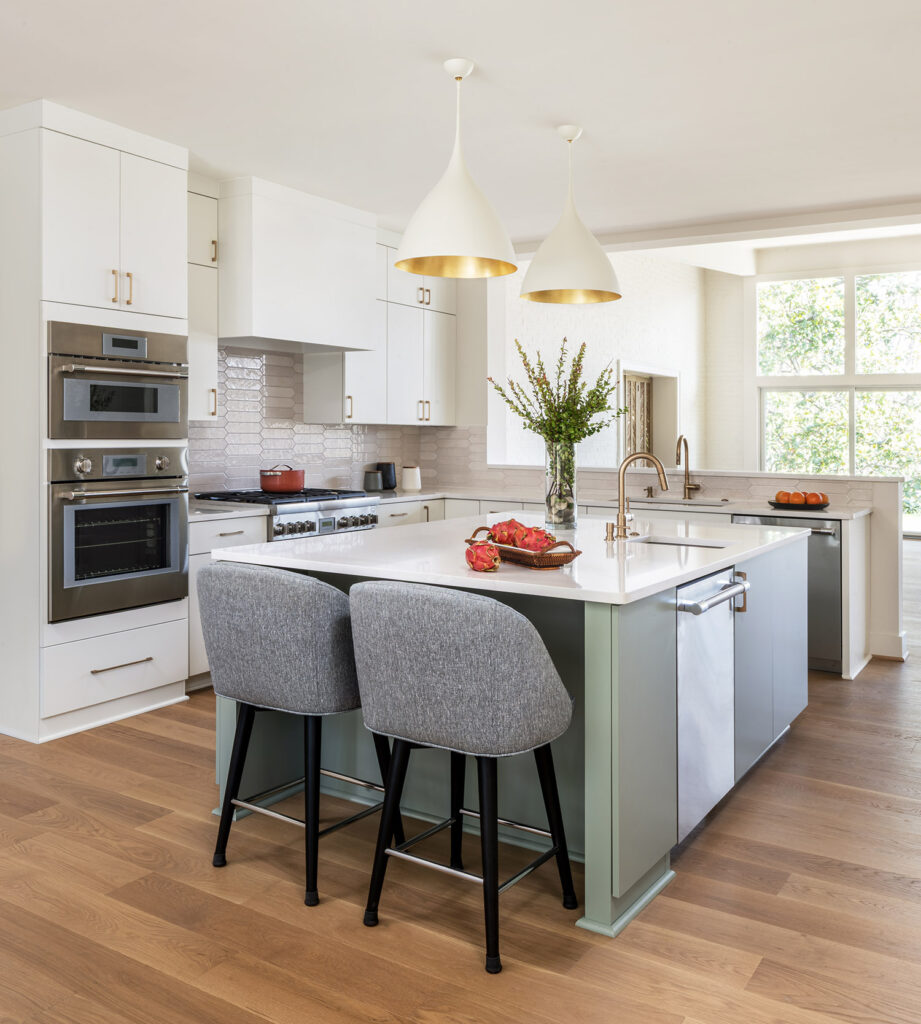
Closed-Off Floor Plans
The kitchens of pre-war and mid-century homes were designed to be functional rooms, not social ones. They were separated from dining rooms and living spaces by walls that were structural, practical, and intentional for their era. Opening those layouts to create the connected, light-filled kitchens that contemporary entertaining demands requires careful structural analysis, thoughtful engineering, and the kind of construction expertise that knows how to carry a load-bearing wall’s work across a steel beam without disrupting the floor above or the integrity of the house around it.
Outdated and Undersized Infrastructure
The electrical panels in older homes were sized for a world before professional-grade ranges, built-in refrigeration, and the full suite of appliances that a modern luxury kitchen requires. The plumbing lines may run in configurations that made perfect sense in 1945 and create real constraints today. The ventilation — or absence of it — reflects a time when range hoods were not yet standard. These are solvable problems, but they need a team experienced enough to anticipate them and honest enough to account for them before the project begins.
Proportions That Resist Standard Solutions
The kitchens of historic homes were built to proportions that do not align neatly with today’s standard cabinet dimensions, appliance sizes, or layout conventions. A room that is eleven feet wide and fourteen feet long requires custom design like custom cabinetry, thoughtful island proportions, appliance selections made with the room in mind rather than from a standard specification sheet. The firms that serve these homes well are the ones that approach every project as a design problem worth solving from scratch.
Character-Preservation Obligations
In communities from Old Town Alexandria to Georgetown, Chevy Chase to the landmark neighborhoods of Washington itself, renovation work in historic homes carries obligations to respect the architectural character of the building and the neighborhood. Even outside formally designated historic districts, the most enduring kitchen remodels in the DC metro area are those that respond to the language of the house rather than impose a style onto it.
Our Design Philosophy

Respect the bones. The ceiling heights, the window placement, the relationship between the kitchen and the adjacent rooms are assets, not limitations. We build with them rather than against them.
Elevate, don’t imitate. Period-appropriate does not mean period-literal. Custom inset cabinetry with a painted finish and period-influenced hardware reads as contemporary and contextual at once. A honed soapstone countertop adds the inviting feel and authentic character of a historic home to a contemporary kitchen, blending seamlessly without appearing artificial.
Open the plan thoughtfully. Removing walls between a kitchen and adjacent living spaces is one of the most impactful changes in an older home, but it requires structural rigor and design discipline. The transition between rooms should feel intentional as if it was always meant to flow this way.
Solve for function first. The best-looking kitchen that does not work well for the way a family actually cooks and lives is a design failure. We develop layouts around our clients’ cooking habits, their entertaining patterns, their preferences for prep flow and storage and let those functional requirements drive the design.
Integrate modern systems seamlessly. Professional-grade appliances, undercabinet lighting, concealed ventilation, and smart home integration are all achievable in historic homes. The challenge is in integrating these systems without visual interruption, so the result feels like an original feature of the home rather than a technology overlay.
Select materials that earn their age. Quartzite. Unlacquered brass. Wide-plank hardwood. Handmade tile. In historic and older homes, material choices matter more than anywhere else. These are rooms where the surfaces will be touched, used, and seen every day for decades.
The MDBG Process: Design and Construction as a Single, Cohesive Conversation
The most avoidable source of frustration in kitchen remodeling, particularly in older homes, is the gap between design intent and construction execution. A designer specifies an island dimension that leaves no room for the swing of the refrigerator door. A layout calls for the range moved to an exterior wall where ventilation is straightforward in theory and complicated in practice. A countertop material is selected without a conversation about the substrate conditions that will determine whether it performs as promised.
These are not uncommon scenarios. They are the predictable result of treating design and construction as sequential phases managed by separate parties.
Our design-build process removes that gap. Design and construction work as a unified team from the first conversation through the final walkthrough. A single point of accountability means that every design decision is made with full knowledge of what it requires to build, and every construction decision is made in service of the design intent. The vision that takes shape in the planning phase is the one that gets built. No value-engineering after the fact. No surprises when the walls open.
For homeowners in McLean, Bethesda, Arlington, Great Falls, and the surrounding luxury communities of the DC metro area, this matters enormously. A kitchen remodel in a historic home is a complex undertaking. It deserves a process structured to match that complexity.

Why Metro Design Build Group
Kitchen remodeling in a historic or older home is not a project that rewards the lowest bid. It rewards depth of experience, disciplined process, and the kind of honest assessment that only comes from a team invested enough in the outcome to tell you what the project actually requires — before the walls open and the decisions become expensive.
Metro Design Build Group was built on exactly that premise. Our leadership brings years of experience inside large, high-end construction firms. We kept the disciplined process, the quality standards, and the accountability that distinguish those firms. Plus, we’ve removed the showroom overhead, the layered sales staff, and the institutional distance between the people who design and the people who build. What remains is a firm that delivers the craftsmanship and process rigor of an established luxury remodeler, with the directness and personal investment of an owner-led team that puts its name on every project it takes on.
Ready to reimagine the heart of your historic home? Let’s begin with a conversation about your kitchen, your vision, and how our design-build process can bring them together with the precision and care they deserve.