

There is a particular kind of homeowner in the Washington, DC metro area. One who chose their home not despite its age, but because of it. Who saw the original hardwood floors, the deep window casings, and the plaster ceiling medallion not as problems to be solved but as reasons to sign the contract. Who understands that the character accumulated over a century of daily life is not something a new-construction home can replicate and that preserving it is not nostalgia – it is good judgment.
And yet, living in a home you love is different from living in a home that works. The kitchen that charms with its vintage proportions frustrates with its lack of storage. The primary suite that feels private and quiet also feels dated and undersized. The basement that adds square footage on paper functions as little more than a utility room in practice. The home has everything that matters except the livability that modern life demands.
At Metro Design Build Group, this is the dilemma we are built to solve. Not by choosing between a home’s character and its function, but by designing renovations that deliver both. What follows are the ideas and principles we return to most consistently when working with homeowners across Northern Virginia, Washington, DC, and Montgomery County who are navigating exactly that challenge.
Start With the Home's Architectural Language
Before a single design decision is made, the most important thing a homeowner and their design team can do is read the house carefully. What is the architectural period? What are the proportions of the rooms? What materials appear consistently throughout, and what is their quality and character?
These are not academic questions. They are the foundation of every renovation decision that follows. A home that extends its existing design logic into renovated spaces, rather than just layering an unrelated style over them, will feel coherent, intentional, and permanent. A home that ignores them will feel remodeled, no matter how much was spent.
This holds across every architectural tradition in the DC metro area. The Federal and Georgian Revival homes of Georgetown and Cleveland Park have a formal symmetry that renovation work must honor. The craftsman bungalows of Takoma Park and Falls Church have a warmth and handcraft sensibility that calls for different choices entirely. The mid-century moderns of Bethesda and Arlington have a relationship to light and open space that should be amplified rather than complicated. The Colonial Revivals of McLean, Great Falls, and Potomac carry a gracious proportionality that contemporary renovation can serve beautifully. Every home in this region has an architectural language.
The Kitchen: Open The Plan Thoughtfully
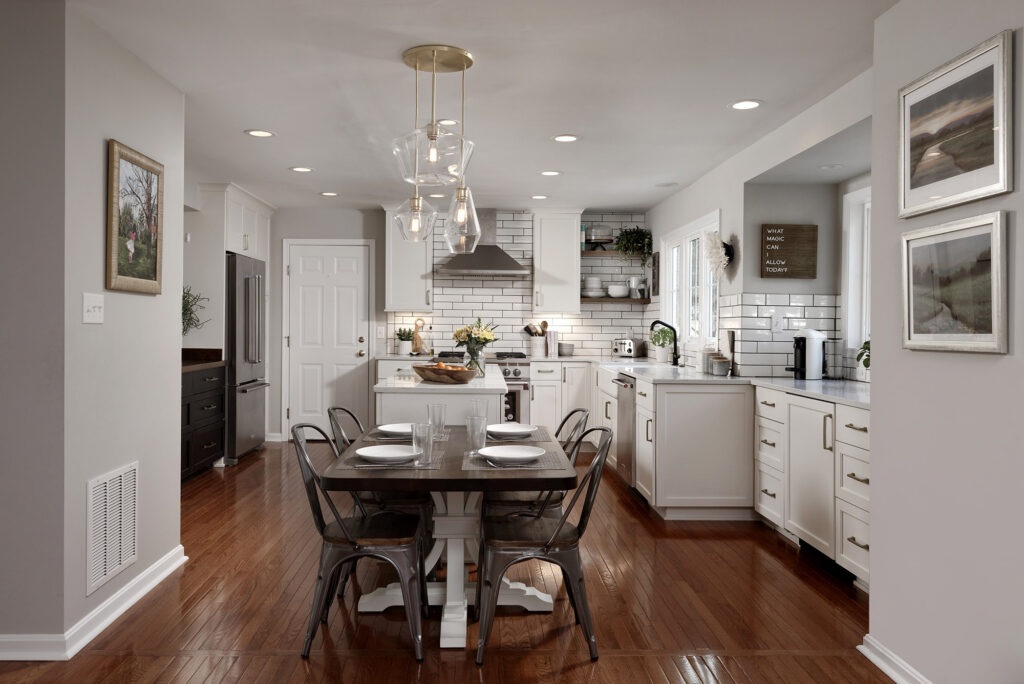
The single most requested renovation in older DC metro homes is also the one with the highest potential for misstep: opening the kitchen to adjacent living spaces. When done well, it transforms a home. When done carelessly, it produces a room that feels unfinished.
The difference lies in how the transition is handled. Load-bearing walls require structural solutions that need to be integrated into the design rather than exposed as an afterthought. Flooring, lighting, and the relationship between the newly unified space and outdoor living all need to be considered from the beginning. The result, when executed through a disciplined design-build process, is not a kitchen that was opened up. It is a home that breathes differently and better.
The Primary Suite: Privacy, Proportion, And Genuine Luxury
In the older homes of the DC metro area, the primary suite is frequently the room that has fallen furthest behind. A bedroom that is gracious in size but lacks adequate storage. A bathroom that serves its basic function while offering none of the spa-caliber experience a primary suite renovation can deliver.
The renovations we find most successful begin with a willingness to think about the primary floor holistically. Often, the space required to create a genuinely excellent primary suite is already present in an underused adjacent bedroom, in a hallway that adds little, in a bathroom footprint that can be expanded without altering the home’s exterior. A walk-in closet that functions as a dressing room. A primary bathroom with a curbless walk-in shower, a soaking tub positioned to receive natural light, and materials that honor the character of the surrounding home. In the luxury communities of Northern Virginia and Montgomery County, these are not extravagances. They are the baseline expectation of a home performing at its potential.
The Basement: From Afterthought to Genuine Living Space
Few renovation investments in older DC metro homes deliver a more dramatic transformation than a well-conceived basement remodel. The typical unfinished basement in a home in Alexandria, Arlington, or Bethesda represents significant square footage, contributing almost nothing to daily quality of life.
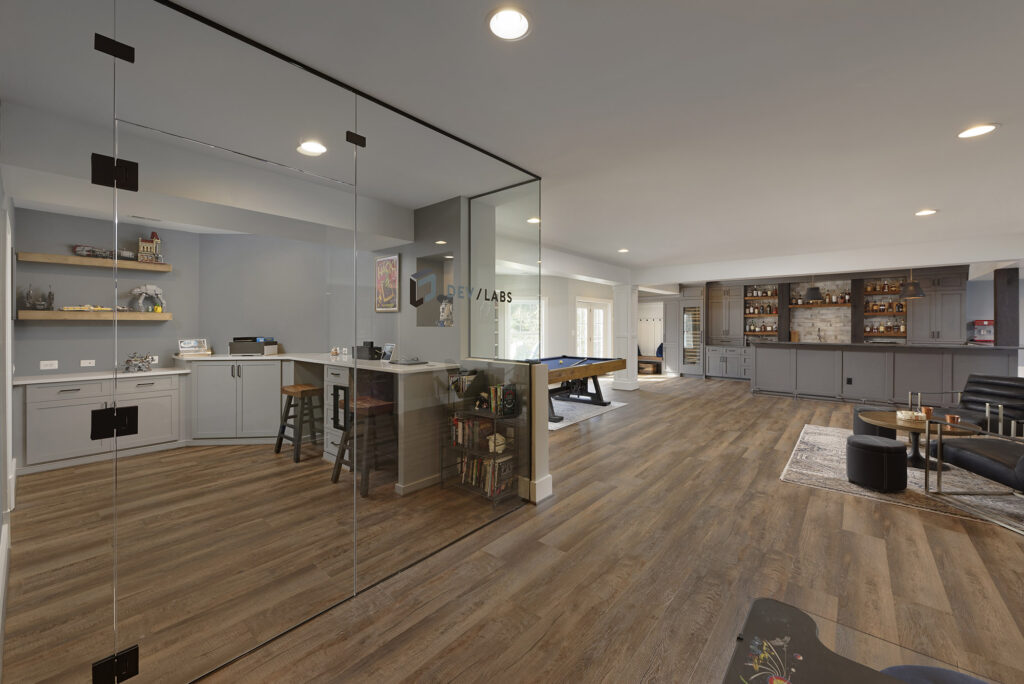
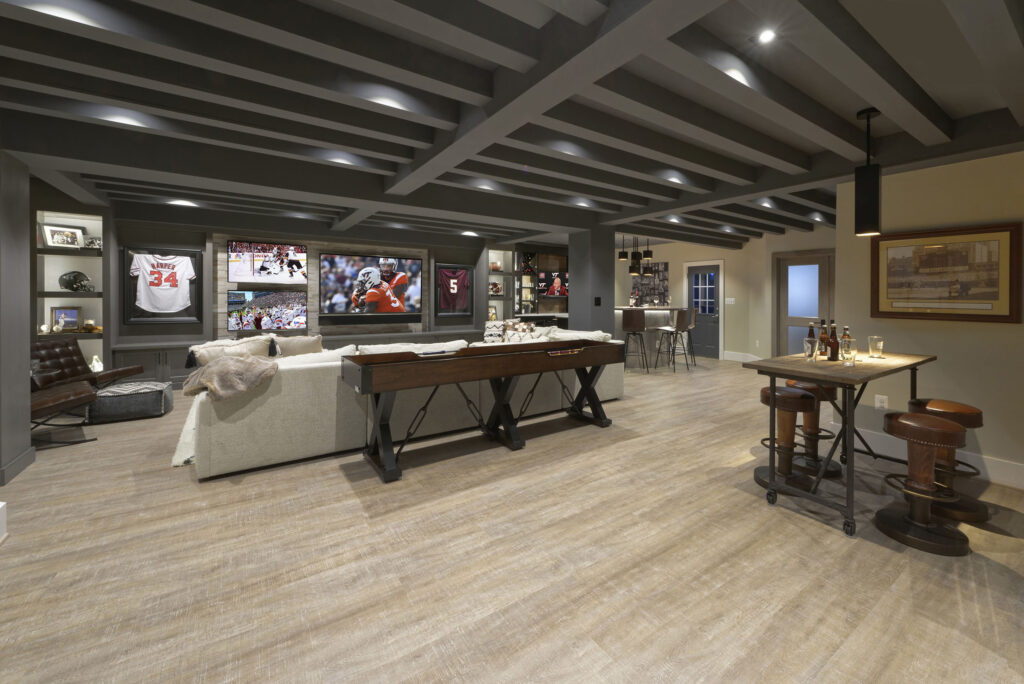
The question that drives a successful basement renovation is not how to finish the space, but what the household actually needs that it does not currently have. A dedicated home office with proper acoustic separation. A media room designed for how the family watches and listens. A guest suite with its own entrance and bathroom. A fitness space that eliminates the hassle of going to the gym. The result is a basement that no longer reads as a basement. Instead, it reads as a floor of the home.
Home Additions: Growing the Home Without Losing It
Sometimes the renovation a household needs cannot be accomplished within the existing footprint. A family that has grown beyond what the current bedroom count supports. A kitchen that cannot be meaningfully expanded without adding to the back of the house. In these cases, a home addition is not an extravagance, it is the right solution.
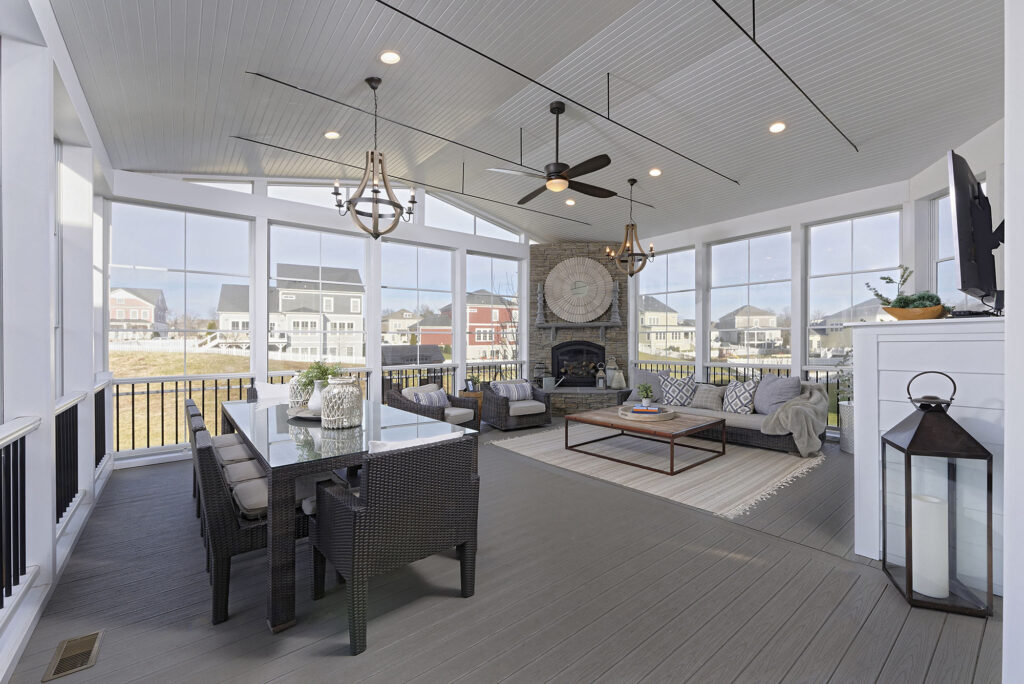
What distinguishes a great addition from a merely functional one is the degree to which it reads as original. The addition that announces itself with a roofline that does not connect to the existing geometry or exterior materials that do not match undermines the architectural integrity of the home regardless of how well it is built. The addition that disappears into the house requires a higher level of design intelligence and a deeper familiarity with the home’s existing language. In the established neighborhoods of the DC metro area, it also requires knowledge of local regulatory requirements, something Metro Design Build Group brings to every project of this kind.
Whole Home Remodeling: When the Vision Is Comprehensive
For some homeowners, the need is not a single room but a comprehensive rethinking of how the home functions as a whole. A whole home remodel in an older DC metro property is among the most complex undertakings in residential renovation and among the most rewarding. It is an opportunity to address everything that has accumulated over decades of previous ownership: the layout that never quite made sense, the systems that have reached the end of their useful life, the rooms that have always worked against each other rather than together.
The approach that serves these projects best is the one that defines Metro Design Build Group’s process: a unified design and construction team, a single point of accountability, and a vision established at the outset and held consistently through every decision that follows. The homes that emerge are not renovated homes. They are homes that have become, fully and finally, what they were always capable of being.
Designing For the Long Term
What connects all of these renovation ideas is a single underlying principle: designing for the long term rather than for the moment. In the Washington, DC metro area’s luxury communities, this shapes material choices, layout decisions, and the level of craft that goes into every detail. It is the difference between a renovation that looks current today and feels dated in five years, and one that earns its place in the home’s long history from the day it is completed.
That is the standard Metro Design Build Group applies to every project across Northern Virginia, Washington, DC, and Montgomery County. Not what is popular, but what is right. Not what is expedient, but what endures.
If you are ready to have that conversation about your home, we are ready to listen.