

There is a reason homeowners in Old Town Alexandria, Capitol Hill, Chevy Chase, and the storied neighborhoods of McLean and Great Falls choose to stay rather than sell. The older homes of the Washington, DC metro area carry something that new construction simply cannot replicate: a sense of permanence and craftsmanship rooted in a different era. Original millwork, plaster walls with their subtle imperfections, transom windows flooding a hallway with morning light. These are not inconveniences to be corrected, they are the identity of the home.
And yet, the bathrooms in these homes often tell a different story. Vintage tile from the 1950s. A cast-iron tub that is charming until it is not. Layouts that made sense when indoor plumbing itself was a novelty. Ventilation, lighting, and storage options that fall short of what a contemporary household demands.
At Metro Design Build Group, we collaborate with homeowners throughout Northern Virginia, Washington, DC, and Montgomery County, Maryland who face this exact challenge. They have a deep affection for their home’s character but also have a practical need for a bathroom that functions efficiently in the present. Navigating that balance is one of the most demanding and rewarding challenges in residential remodeling, and it is one our team has refined into a disciplined craft.
The Challenge: Why Older Homes Require a Different Kind of Thinking
A bathroom remodel in a newly built Colonial in Loudoun County and a bathroom remodel in a 1920s Tudor in Chevy Chase are, in practice, entirely different undertakings. The infrastructure, the proportions, the architectural language — all of it shifts. Experienced remodelers understand this. Less experienced ones discover it partway through demolition.
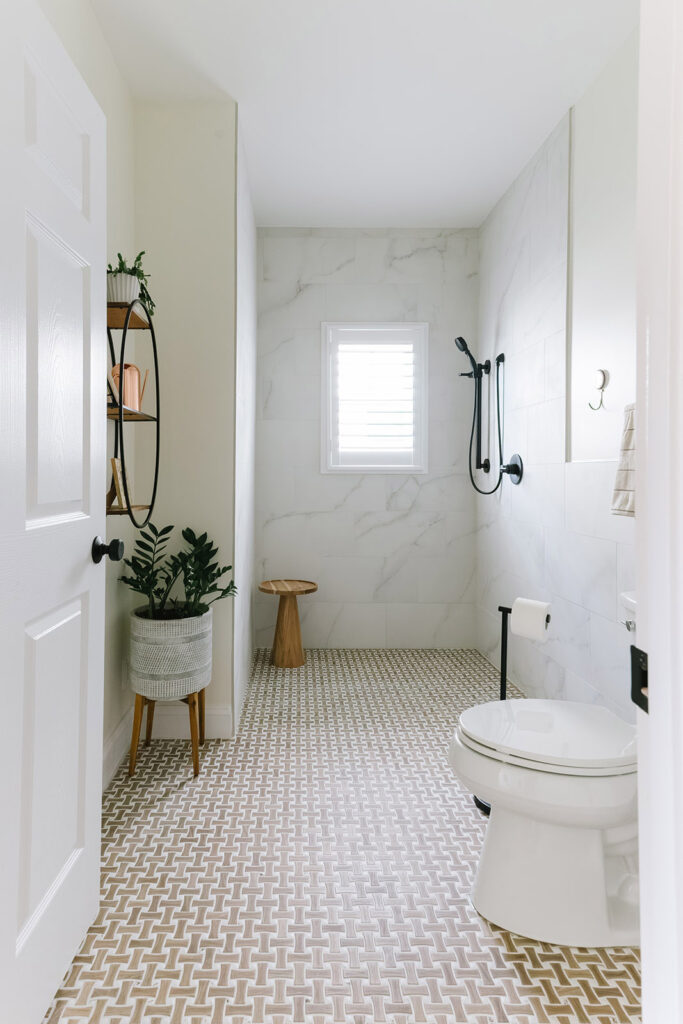
Structural Surprises
Older homes in the DC metro area were built with techniques and materials that predate modern standards. Plumbing may run through walls that were never intended to accommodate today’s fixtures. Subfloors require reinforcement before radiant heating or large-format stone tile can be installed without risk of cracking or settling.
Compact Footprints
Bathrooms in pre-war and mid-century homes were not designed for the spa-inspired primary suite that today’s homeowner expects. Rooms that measure five by eight feet present real constraints, but also real opportunities for inventive design that prioritize function without sacrificing elegance.
Character-Preservation Obligations
In many DC metro communities, renovation work carries design review obligations. Even outside formal historic districts, the most successful remodels are those that respond to the architectural language of the home rather than ignore it.
Hidden Systems
Knob-and-tube wiring. Cast-iron drain lines. Original lath and plaster. The moment walls open, older homes reveal layers of history that require careful assessment. The right firm anticipates these discoveries and incorporates them into the project plan, not as emergencies, but as expected variables in a thorough process.
Understanding these variables is not a reason to hesitate. It is a reason to choose your remodeling partner with care.
Our Design Philosophy: The Art of Contextual Modernization
The term “modernization” can be misapplied. In less experienced hands, it becomes an excuse to strip away everything that gives a historic home its soul, like replacing original hex tile with generic porcelain, swapping recessed panel millwork for flat slab doors, installing fixtures that would look equally at home in a suburban hotel. The result is a space that is technically updated, but the character is lost.

At Metro Design Build Group, our design-build process begins with a different question: What does this home want to become? The answer is always informed by the architecture already present. A craftsman bungalow in Falls Church calls for different design decisions than a Georgian Revival in Great Falls or a mid-century modern in Bethesda. Period, proportion, and detail matter — not as limitations, but as creative parameters that lead to more refined outcomes.
This is contextual design: a commitment to creating spaces that feel like they belong exactly where they are, updated with the quality and sophistication expected by today’s discerning homeowner.
Respect the bones. Original architectural elements like moldings, door casings, and window proportions provide a visual inspiration for the renovation. We build from that vision rather than against it.
Elevate, don’t imitate. Period-appropriate does not mean period-literal. A marble hex floor updated in a larger format, a pedestal sink with contemporary proportions in a classic profile are choices that honor context while delivering modern performance.
Solve for light and space first. The most common complaint in older bathrooms is that they feel dark and cramped. Before any finish selection begins, our design team evaluates how natural light moves through the space and finds every opportunity to expand the visual footprint, even when the physical footprint is fixed.
Integrate modern systems invisibly. Radiant floor heating, programmable lighting, recessed storage, and improved ventilation are all achievable in historic homes. The art is in delivering these upgrades without visual interruption of the design.
Select materials that age with integrity. Unlacquered brass. Honed marble. Hand-glazed ceramic. Natural stone. These materials develop patina rather than simply wearing out, which is an important distinction in a home that already has decades of character to its name.

The MDBG Process: Design and Construction as a Single, Cohesive Conversation
The most common source of frustration in bathroom remodeling, particularly in older homes, is the gap between the design phase and the construction phase. A designer specifies a freestanding tub that requires plumbing moved two feet from its current position. An architect calls for a curbless shower that demands the subfloor be rebuilt. These are solvable problems, but only if the people who build the space are part of the conversation from the beginning.
Our design-build process eliminates that gap entirely. Design and construction work as a unified team under a single point of accountability, which means the vision of the planning phase is the vision that gets built. There are no surprises when walls open. No value-engineering that compromises the design after the fact. No finger-pointing between a separate designer and a separate contractor when an issue arises.
The MDBG Difference
From the historic row houses of Capitol Hill to the stately colonials of Great Falls, the Washington, DC metro area encompasses one of the most architecturally rich and architecturally demanding residential landscapes in the country. Our team has spent years developing our knowledge in this region’s varied building traditions. That local expertise shapes every decision we make, from material sourcing to code compliance to the specific structural realities of homes built across more than a century of design evolution.
Ready to transform your historic home’s bathroom? Let’s begin with a conversation about your home, your vision, and how our design-build process can bring them together with the care and precision they deserve.